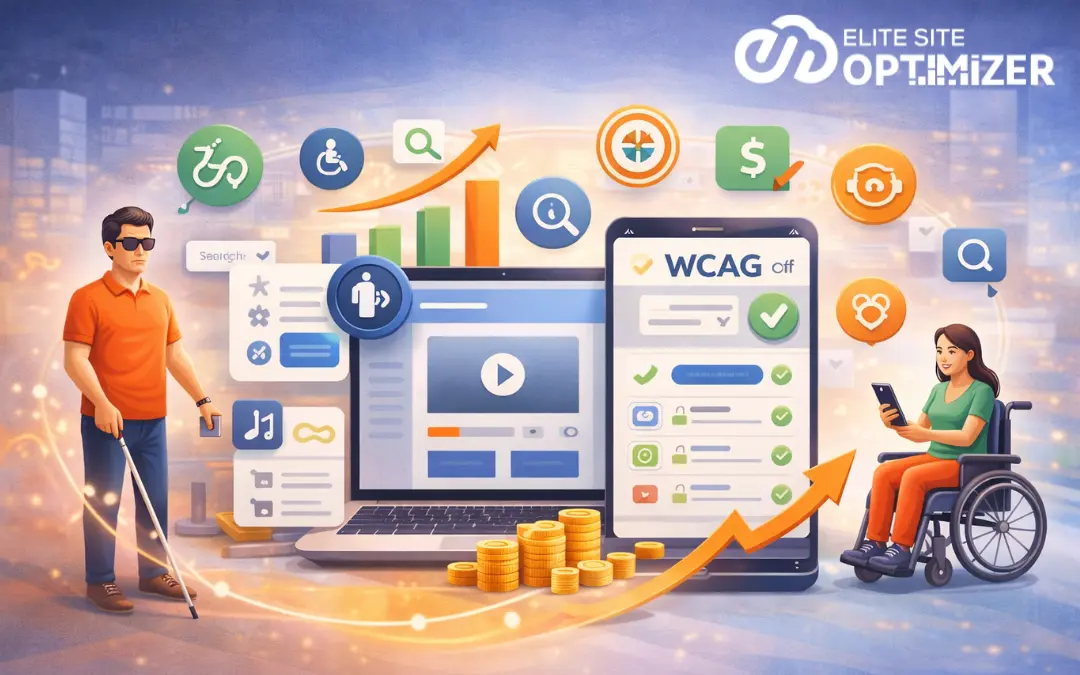
Ensuring digital accessibility presents opportunities far beyond the checkmark of compliance. The WCAG 2.2 compliance norms define many of the modern standards related to accessibility on websites. The WCAG establishes clear, up-to-date guidelines that allow brands to develop inclusive, user-friendly, and search-optimized digital experiences.
While accessibility serves to support access to digital information for people with disabilities, the impact is much broader. It helps improve traffic, user engagement, conversion rates, and long-term ROI. At Elite Site Optimizer, we see WCAG 2.2 compliance not as a checkbox, but as a powerful growth lever that improves traffic, engagement, conversions, and long-term ROI.
Understanding WCAG 2.2 Compliance and Its Business Impacts
The WCAG is the global standard when discussing digital accessibility. And WCAG 2.2 is a step ahead from previous versions, especially as it relates to required enhancements that support individuals with cognitive disabilities, limited mobility, low vision, and situational impairments. These changes are encouraging organizations to build digital experiences that are intuitive, perceivable, and usable for all users.
But, the real shift is that WCAG 2.2 website accessibility guideline has a direct correlation to website performance, discoverability and revenue. Every single accessibility improvement also improves user experience and search engine discoverability. Therefore, accessibility is no longer a standalone initiative; it’s intertwined with how a site draws, retains, and converts visitors.
94.8% of homepages still contain detectable WCAG failures, showing only a 3.1% improvement over the past six years, highlighting how far most websites remain from true accessibility compliance.
WCAG 2.2 Compliance Improves SEO and Organic Traffic
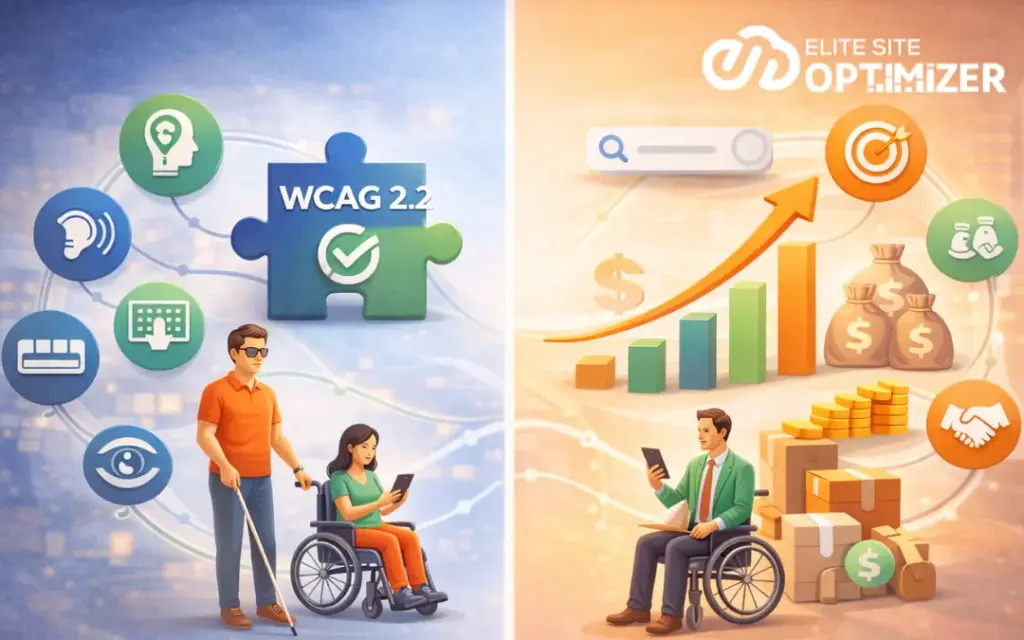
Search engines prioritize user experience above anything else. Since many of the WCAG 2.2 principles align with good technical SEO best practices, accessible websites tend to rank better and to enjoy greater organic visibility. WCAG 2.2 improves SEO in many ways, such as:
- Clear heading structure helps search engines understand page hierarchy.
- Alt text for images allows the content to be shown in image search and improves context for search engines.
- Logical link naming improves internal linking, and improves crawl accessibility.
- Better navigation improves user-bounce rate, and session duration – both signals that improve ranking.
- Accessible forms and interactive features improve user completion rate, and reduce abandonment.
Search crawlers can better understand the content when the pages are available, and they use more time and interact more. Elite Site Optimizer helps brands align WCAG 2.2 accessibility standards with SEO best practices to increase discoverability and search visibility.
Better Accessibility Means Higher Conversions and ROI
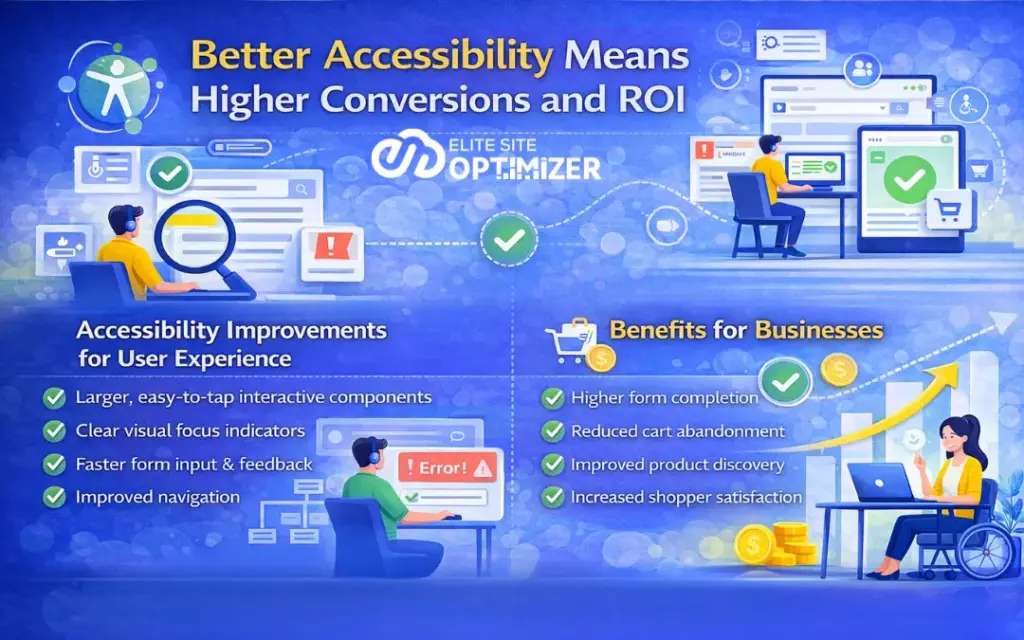
The Web accessibility compliance of WCAG 2.2 emphasizes important UX features such as easy navigation, regular layouts, evident focus indicators and predictable behavior. These UX improvements benefit all users, not only users utilizing accessibility strategies. These guidelines introduce usability improvements, such as:
- Larger, easy-to-tap interactive components
- Better visible focus indicators
- Clear feedback for form input with error messaging
- Reduced cognitive load
- More predictable behavior for components
When a site becomes easier and more natural to use, businesses see that:
- More visitors complete forms
- Abandonment drops on checkout
- Discovery of products improves
- Frustration drops
- Shoppers make faster, more confident decisions
This improves completion rates that flow directly to increased conversions, repeat purchases, and customer satisfaction.
More Potential Conversions
A lot of organizations do not fully grasp the size of the overall audience impacted by inaccessible websites. More than one billion people globally live with disabilities, and millions rely on assistive technology. The principles of WCAG 2.2 make your website accessible to the users and allow interaction with it. Improved access will help:
- Users with mobility challenges
- Users with visual disabilities
- Users that have dyslexia or cognitive disabilities
- Users browsing in the dark or noisy environments
- Users browsing on small screens or older devices
When barriers of accessibility drop, more people can complete the buying journey. This increases conversions and expands your addressable audience.
WCAG 2.2 Compliance Builds Trust and Future-Proofs Your Brand
The laws of the world on the topic of digital access have improved. The ADA website compliance rules are subjecting non compliance sites to increased scrutiny and similar rules are being enforced all over the world. Lack of accessibility may lead to a higher likelihood of legal claims and the cost of remedies, which is usually enforced, PR problems and lack of confidence in your products and partners.
Implementing WCAG 2.2 compliance guidelines sets well-grounded guardrails that significantly reduce these risks. Although, you are not currently covered by the more stringent laws of accessibility, pursuing adherence to the existing guidelines creates a possibility of sustenance and reduces your risk of facing risks. Elite Site Optimizer makes sure that your website complies with WCAG 2.2 requirements and builds more brand trust, legal preparedness, and digital resilience over time.
Building Trust and Loyalty
Accessibility is not just functional, it is also emotional. When a user perceives inclusion and validation on a website, they trust it more. When they experience barriers, their trust disappears instantly. WCAG 2.2 gives consideration and options to create experiences that feel inclusive and seamless such as:
- Clear instructions
- Predictable processes
- Content that is easy to find
- Cues that are visible on the page
- Interactions with little to no friction
Consumers are paying attention to accessibility now, and they are recognizing brands demonstrating real commitment to accessibility.
Relevance of WCAG 2.2 for AI Search, Voice Search & Conversational Experiences

As the creation of AI-driven search technology continues to improve, the clarity and structure of your content should be prioritized. WCAG 2.2 compliance within your website means it will include the highly structured, machine-readable content that AI search portfolios favor. Thus, the reasoning towards improving accessibility includes factors like accuracy in voice searches, AI snippet content, and aligning with conversational search, and will help yield better higher rank in relevance for context and intent-based searching. If your website makes it easier for assistive technology to read, it can be indexed and understood more easily by AI-driven search engines.
A Website Accessibility Audit to Identify Lapses
Compliance isn’t always apparent. Issues like keyboard traps, missing labels, improper focus order, and inaccessible error messages aren’t visible while browsing the average website. During an accessibility audit of a website, you could see issues like missing alt attributes, issues with headers, color contrast issues with text, inaccessible forms or other factors affecting accessibility.
Accessibility That Drives Growth
WCAG 2.2 isn’t merely a fresh checklist; it’s a significant structure for creating digital experiences that work for all users. Enhanced accessibility automatically leads to benefits across your SEO, UX, conversions, audiences, and brand trust. This leads to more traffic, better engagement, more ROI, and the right platform for your future digital needs.
To invest in WCAG 2.2 compliance is not just the right thing to do; it is a tactical approach to improving your overall digital ecosystem. Turn accessibility into measurable growth, start your WCAG 2.2 journey with the Elite Site Optimizer accessibility audit and unlock higher traffic, trust, and ROI.
Related Posts